
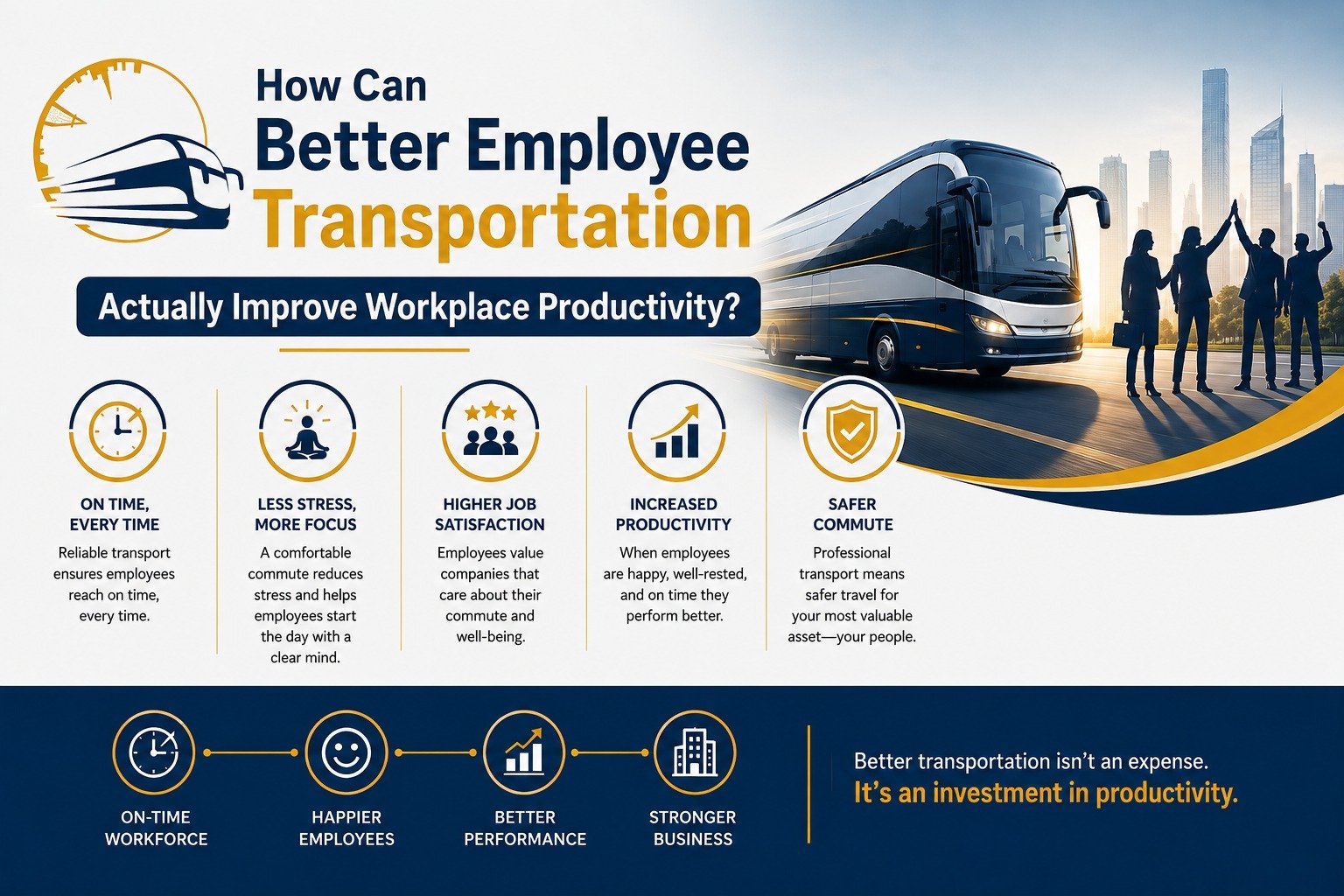
A tired, stressed employee who just fought traffic for an hour isn’t walking into the office ready to perform their best. That commute shapes far more of the workday than most companies realize. Getting employee transportation in Dubai right isn’t just a logistics decision; it’s one that quietly influences focus, punctuality, and morale from the moment someone clocks in. Here’s exactly how the connection works, and why it’s worth your attention.
The Hidden Link Between Commutes and Concentration
What We Actually Mean by Workplace Productivity
Productivity isn’t just hours logged; it’s the quality of focus someone brings once they’re at their desk. An employee who arrives frazzled from a stressful commute takes longer to settle into meaningful work than one who arrives calm.
Why the Journey to Work Matters More Than People Assume
Commute stress carries over. Studies consistently link long, unpredictable travel times to higher fatigue and lower concentration during the first hours of work, precisely when many important tasks get tackled.
How Reliable Transport Directly Boosts Performance
Punctuality Stops Being a Daily Struggle
When transport is organized and predictable, employees stop worrying about missed buses or unpredictable traffic. That mental space, freed from constant time anxiety, gets redirected toward actual work the moment they arrive.
Reduced Fatigue Means Sharper Decision-Making
- Less physical exhaustion from self-driving through congestion
- Lower stress hormones from unpredictable commute timing
- More energy reserved for actual job tasks
Arriving less drained naturally means better focus for the first crucial hours.
Consistency Builds Trust Between Staff and Employer
Reliable transport signals that a company genuinely considers its employees’ daily experience, not just their output. That sense of being valued often translates into stronger loyalty and noticeably lower turnover over time.
Different Transport Models Solve Different Workforce Needs
Understanding Labour Transportation as a Distinct Category
Labour transportation in Dubai typically serves larger workforce groups, often on-site or industrial staff, requiring scheduled group pickups from labour accommodations. Reliability here directly affects whether shifts start on time or fall behind.
Why Office Teams Need a Different Transport Approach
Corporate teams often benefit from dedicated staff transport services in Dubai that align with flexible office hours, multiple pickup zones, and comfort expectations that differ significantly from industrial workforce transport needs.
When Bulk Movement Makes More Sense
For larger teams commuting together, arranging a bus rental in Dubai often proves more cost-effective and easier to coordinate than multiple smaller vehicles, especially for companies operating across scattered residential areas.
Building a Transport System That Actually Works
Mapping Employee Locations Before Choosing Routes
Efficient transport planning starts with understanding where employees actually live, not assuming convenient central pickup points. Poorly planned routes extend commute times unnecessarily, undoing much of the productivity benefit you’re aiming for.
Vehicle Comfort Isn’t a Minor Detail
Air conditioning, seating space, and cleanliness affect how employees feel throughout the ride. A cramped or uncomfortable vehicle adds physical strain before the workday has even technically started.
Timing Flexibility for Shift-Based Roles
Companies operating multiple shifts need transport schedules that actually match those shift changes, not a single fixed timing. Misaligned schedules quietly create tardiness problems that ripple into daily operations.
The Bottom Line
Productivity doesn’t start at the office door; it starts the moment someone leaves home. Investing thoughtfully in employee transportation in Dubai isn’t an overhead expense; it’s a decision that shapes focus, attendance, and morale well before the workday officially begins.
FAQs
Does employee transport really affect absenteeism rates?
Yes, considerably. Unreliable personal commuting options often lead to late arrivals or missed days, while organized transport removes that unpredictability, encouraging steadier attendance across teams.
How often should transport routes be reviewed?
Ideally every few months, or whenever employee addresses change significantly. Outdated routes gradually become inefficient, adding unnecessary travel time that chips away at arrival punctuality.
Is group transport cost-effective for smaller companies?
Often yes, particularly when multiple employees live in overlapping areas. Shared transport reduces per-employee costs while still delivering the punctuality and comfort benefits larger fleets offer.
Can transport services accommodate irregular work schedules?
Reputable providers typically build flexible scheduling options for companies with rotating shifts, ensuring pickups and drop-offs align accurately with actual working hours rather than fixed generic timings.
Does vehicle type matter for productivity outcomes?
Somewhat, yes. Comfortable, well-maintained vehicles reduce physical fatigue during transit, meaning employees arrive in noticeably better condition to focus on demanding tasks immediately.